

Clinical Research Associate (CRA)

The Clinical Research Associate (CRA) Training Pathway at TMEP Career Coaching Institute is a structured three-level professional development program designed to prepare students for careers in clinical research, clinical trial monitoring, and clinical project management within pharmaceutical, biotechnology, medical device, and contract research organizations (CROs).
Clinical Research Associate (CRA) 100 – Entry Level Program
The Clinical Research Associate (CRA) 100 Program at TMEP Career Coaching Institute is an entry-level professional training program designed to prepare students for careers in clinical research monitoring and clinical trial operations within the pharmaceutical, biotechnology, medical device, and contract research organization (CRO) industries.
This program provides foundational knowledge of the clinical trial lifecycle, regulatory requirements, and monitoring responsibilities performed by Clinical Research Associates. Students will gain a strong understanding of how clinical trials are designed, managed, monitored, and regulated to ensure participant safety, data integrity, and regulatory compliance.
Through structured instruction and real-world case studies, participants will learn the principles of Good Clinical Practice (ICH-GCP), FDA regulations, research ethics, protocol compliance, clinical documentation, and clinical trial monitoring processes. The course also introduces key industry systems and documentation tools such as Trial Master Files (TMF), Case Report Forms (CRFs), Electronic Data Capture (EDC), and Clinical Trial Management Systems (CTMS).
The CRA 100 program focuses on developing practical skills required to support clinical trial sites, sponsors, and contract research organizations. Students will learn how to conduct site monitoring activities, source data verification (SDV), regulatory document review, informed consent verification, protocol deviation identification, and clinical site communication.
In addition to technical knowledge, the program prepares students for professional success by covering career readiness, resume development, interview preparation, and industry networking strategies tailored for entry-level roles in clinical research.
Graduates of the program will be equipped with the foundational knowledge needed to pursue roles such as Clinical Research Associate (CRA I), Clinical Trial Assistant (CTA), Clinical Research Coordinator (CRC), Clinical Project Assistant, or Regulatory Clinical Support Specialist.
The training is ideal for individuals with backgrounds in life sciences, healthcare, nursing, biomedical engineering, public health, or other scientific disciplines who are seeking to transition into the rapidly growing clinical research industry.
Program Highlights
• Introduction to Clinical Research and Drug Development
• Clinical Trial Phases (Preclinical, Phase I–IV)
• Good Clinical Practice (ICH-GCP) and FDA Regulations
• Clinical Trial Monitoring and Site Management
• Source Data Verification (SDV) and Data Integrity
• Regulatory Documentation and Trial Master Files (TMF)
• Clinical Trial Systems (EDC, CTMS, CRF)
• Protocol Compliance and Deviation Management
• Clinical Research Ethics and Patient Safety
• Career Coaching, Resume Building, and Interview Preparation
Program Outcome
Upon completion of the CRA 100 program, participants will receive a Certificate of Completion from TMEP Career Coaching Institute and will have the foundational knowledge and practical insight necessary to begin pursuing entry-level positions in clinical research.
Level 1 Clinical Research Associate (CRA I) is typically an entry-level or early-career professional responsible for monitoring clinical trials and ensuring that studies are conducted according to regulatory requirements, study protocols, and Good Clinical Practice (GCP).
At this level, the CRA is usually working under the supervision of a Senior CRA, Clinical Trial Manager, or Clinical Project Manager and focuses on learning the full clinical monitoring process while supporting active clinical studies.
Clinical Research Associate I – Introduction
A Clinical Research Associate Level I (CRA I) supports the management and monitoring of clinical trials conducted by pharmaceutical, biotechnology, or medical device companies. The CRA ensures that clinical studies are performed in compliance with regulatory guidelines such as FDA regulations, ICH-GCP (International Council for Harmonisation – Good Clinical Practice), study protocols, and sponsor requirements.
CRA I professionals assist with monitoring clinical trial sites, verifying data accuracy, ensuring participant safety, and confirming that investigators follow approved protocols and ethical standards. They work closely with clinical investigators, study coordinators, regulatory teams, and clinical project managers to ensure successful execution of clinical studies.
At this level, CRAs gain hands-on experience with site monitoring visits, regulatory documentation, data verification, and clinical trial management systems (CTMS). The role also involves reviewing informed consent forms, checking case report forms (CRFs), verifying source data, and ensuring proper documentation in the Trial Master File (TMF).
Key Responsibilities of a CRA I
• Assist with site initiation, monitoring, and close-out visits
• Conduct Source Data Verification (SDV) to confirm data accuracy
• Ensure clinical trial sites comply with ICH-GCP, FDA, and protocol requirements
• Review informed consent documentation and patient enrollment records
• Support investigators and clinical site staff with protocol compliance
• Maintain regulatory documentation and Trial Master File (TMF) records
• Identify and report protocol deviations or compliance issues
• Collaborate with clinical project managers, data managers, and regulatory teams
• Participate in monitoring visit reports and follow-up actions
Typical Qualifications
• Bachelor’s degree in Life Sciences, Nursing, Biomedical Engineering, Public Health, or related field
• Knowledge of clinical research regulations (GCP, FDA, ICH guidelines)
• Strong documentation, communication, and analytical skills
• Familiarity with clinical trial databases and electronic data capture systems
Typical Salary (United States)
Entry-level Clinical Research Associate I salaries typically range between $60,000 – $85,000 per year, depending on experience, company, and location.
The program progresses from foundational clinical research knowledge to advanced monitoring and leadership in clinical trial management.
Students complete the program in three progressive levels:
• CRA 100 – Beginner / Entry-Level Clinical Research
• CRA 200 – Advanced Monitoring & Site Management
• CRA 300 – Senior CRA & Clinical Project Management
Graduates develop the regulatory knowledge, monitoring skills, and operational expertise required to support clinical trials from preclinical research through post-market surveillance.
CRA 100 – Beginner Program
Entry-Level Clinical Research Associate Training
The CRA 100 program introduces students to the clinical research industry, regulatory requirements, and the fundamental responsibilities of Clinical Research Associates. This program prepares individuals for entry-level roles such as Clinical Trial Assistant (CTA), Clinical Research Coordinator (CRC), and CRA I.
• Resume writing for CRA roles
• Interview preparation
• Industry networking and job search strategies
Typical Entry-Level Salary:
$65,000 – $90,000
CRA 200 – Advanced Monitoring & Site Management
Intermediate Clinical Research Associate Training
CRA 200 expands on the monitoring responsibilities of a CRA and focuses on clinical site management, regulatory compliance, and advanced monitoring techniques used in active clinical trials.
• Transitioning to CRA II or Senior CRA
• Professional certifications (ACRP, SOCRA)
Typical Salary Range:
$90,000 – $120,000
CRA 300 – Senior CRA & Clinical Project Management Track
Advanced Clinical Research Leadership Program
The CRA 300 program prepares experienced professionals for leadership roles such as Senior CRA, Clinical Trial Manager, or Clinical Project Manager. This level integrates clinical trial monitoring with project management, regulatory strategy, and operational leadership.
• Leadership skills for clinical research executives
• Transitioning to Director of Clinical Operations
Typical Salary Range:
$120,000 – $160,000+

Best Value
CRA 100 – Beginner / Entry-Level Clinic
1,000
Introduction to:
The clinical research industry, regulatory requirements.
The fundamental responsibilities of Clinical Research Associates.
GCP training and ACRP Certification.
Resume writing
Valid for one month

Best Value
CRA 200 – Advanced Monitoring
1,500
Every month
Intermediate CRA Training
CRA 200 expands on the monitoring responsibilities and focuses on clinical site management, regulatory compliance, and monitoring techniques used in active clinical trials.
Valid for 3 months

Best Value
CRA 300 – Senior CRA & Clinical PM
2,500
Senior CRA & Clinical Project Management Track.
The CRA 300 program prepares experienced professionals for leadership roles such as Senior CRA, Clinical Trial Manager, or Clinical Project Manager.
Valid for one month
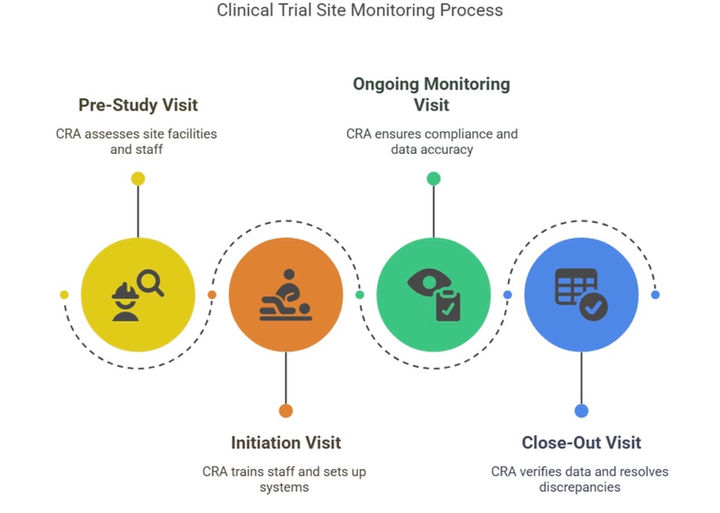

Clinical Research Associates (CRAs) are vital members of clinical trial teams, serving as the link between Sponsors or Clinical Research Organizations (CROs) and study sites. Their core responsibilities are protecting participant safety, safeguarding data integrity, and ensuring trials are conducted according to the protocol, ICH-GCP guidelines, and local regulations. CRAs document, organize, and communicate to keep study results transparent and reliable. Many CRAs manage multiple trials at once and must be adaptable across all trial stages.
Study Start-Up (Study Initiation) CRAs often begin work months before the first patient is consented. Key early activities include Site Selection Visits (SSVs), also called Site Qualification Visits (SQVs) or Pre-Study Qualification Visits (PSQVs). During these visits CRAs evaluate whether a site has the people, equipment, facilities, and patient population needed to run the study. Strong site selection helps reduce start-up delays and improve enrollment.
Common assessment areas at an SSV:
• Staffing: qualified personnel, backup coverage, research experience and credentials.
• Facilities: space, required equipment and functioning status, secure storage for Investigational Product (IP).
• Site information: IRB options and timelines, contract negotiation timelines, ability to start regulatory work in parallel with contracting.
• Documents: presence of applicable Standard Operating Procedures (SOPs).
• Recruitment: site experience recruiting similar patients, outreach resources, ongoing competing trials, retention plans.
• Previous experience: track record with similar trials, past issues and corrective actions, and prior successes.
After SSVs, the CRA prepares a site selection report for the Clinical Trial Manager (CTM) and Sponsor. Once sites are chosen, CRAs often support regulatory submissions, contract or budget questions, and IRB interactions.
Study Conduct (Study Maintenance) This stage is usually the busiest. CRAs perform Site Initiation Visits (SIVs) and routine monitoring visits—on-site or increasingly, remote—based on protocol needs and site performance.
Site Initiation Visit (SIV) responsibilities:
• Train all delegated staff on the protocol and study procedures.
• Confirm IRB approvals are in place.
• Verify receipt and accountability of IP and study supplies.
• Review source documentation templates and regulatory files.
• Collaborate on recruitment strategies and pre-screening plans.
• Ensure staff access to systems and platforms.
• Answer questions and clarify procedures.
Practical pre-SIV tips: prepare and rehearse presentation slides, bring printed copies of critical logs (Monitoring Sign-In, Training Log, Delegation of Authority), and have materials accessible offline.
Routine monitoring responsibilities:
• Visit sites every 4–8 weeks (or remotely as needed).
• Perform source data verification against eCRFs and medical records.
• Monitor safety reporting and resolve serious adverse event (SAE) or protocol deviation issues.
• Verify compliance with protocol, ICH-GCP, and local regulations.
• Implement corrective action plans for noncompliance and follow up on action items.
• Maintain good relationships with site staff to streamline visits and improve productivity.
Study Close-Out As a study winds down, CRAs prepare the site for database lock by completing source data verification and conducting Close-Out Visits (COVs). A COV checks that site activities are finalized and that all data and documentation are in order.
Preparation steps for a COV:
• Confirm and schedule the visit with the Investigator.
• Ensure queries are addressed and eCRFs are signed.
• Coordinate with TMF, Sponsor, and Safety teams on pending items.
• Obtain shipment/return instructions and mailing labels for supplies and IP.
• Prepare a focused agenda (“PI Speech”) for the Investigator meeting.
Typical COV tasks:
• Close or document resolution of remaining queries.
• Confirm regulatory binder completeness and file missing TMF documents where needed.
• Complete IP and supply accountability; collect temperature logs and unused kit counts.
• Return or destroy extra supplies per sponsor instructions.
• Reconcile IVRS/IVR logs with study records.
• Confirm long-term storage location for study documents and record the address in the COV report.
After the COV, the CRA submits a trip report summarizing findings and outstanding action items for the CTM.
Career Development Top-performing CRAs are detail-oriented, organized multitaskers with strong communication skills and an interest in clinical research. With experience, many CRAs move into Clinical Trial Manager (CTM) roles to take on broader oversight and reduce travel. Preparing for a CTM transition typically involves learning study-level responsibilities across start-up, conduct, and close-out, and building project management and leadership skills.
Author note: Tiffany Ashton, MAS, CCRA, a clinical research professional with over twenty years’ experience, emphasizes that robust processes and effective communication help CRAs succeed at each trial stage.

